Gateway node
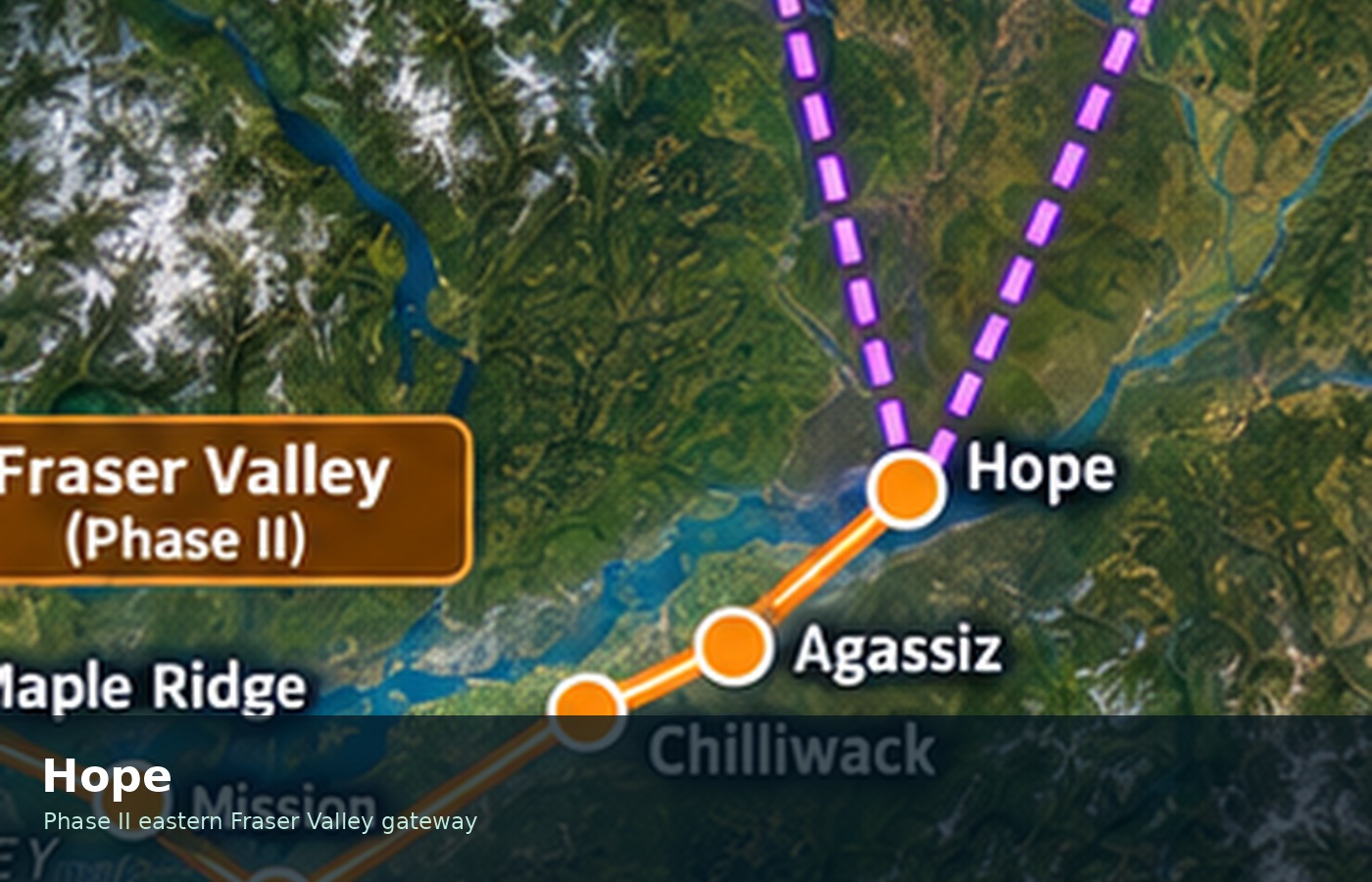
Links the Fraser corridor to the Interior resilience path, with mountainous terrain making careful land and route selection essential.
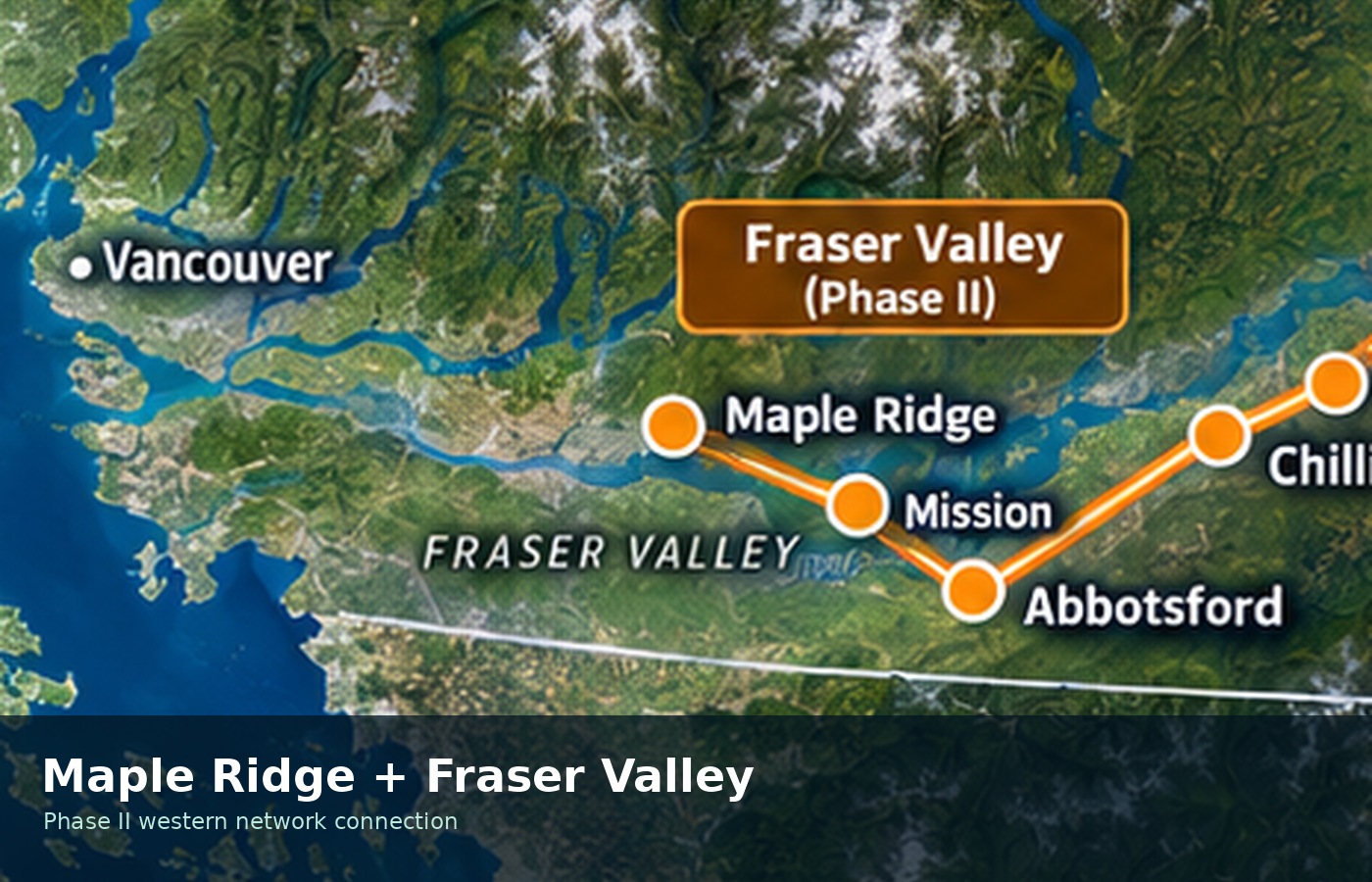
A second ring adds Hope, Chilliwack, Abbotsford, Mission and Maple Ridge, then hands traffic toward Metro Vancouver.
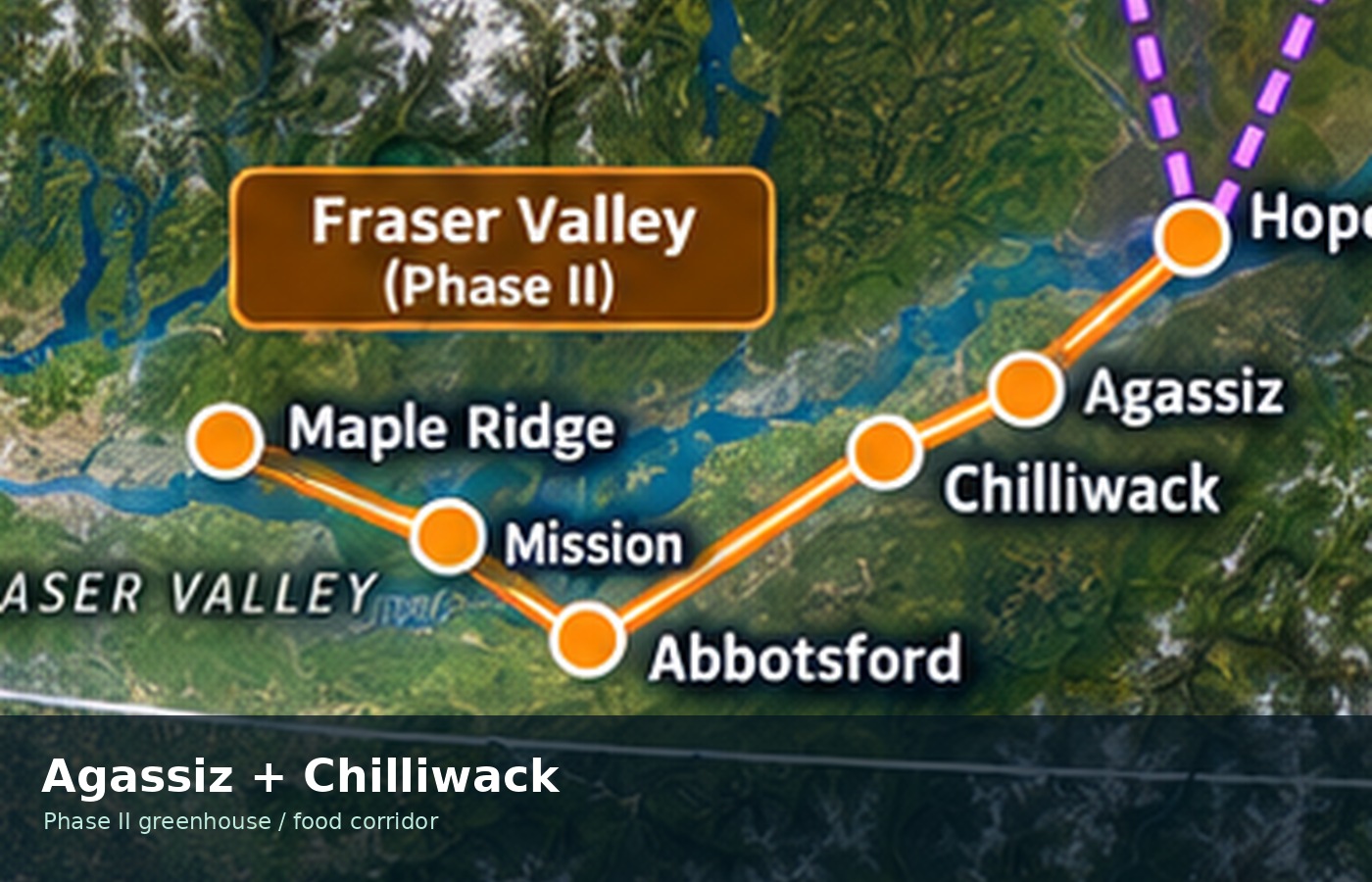
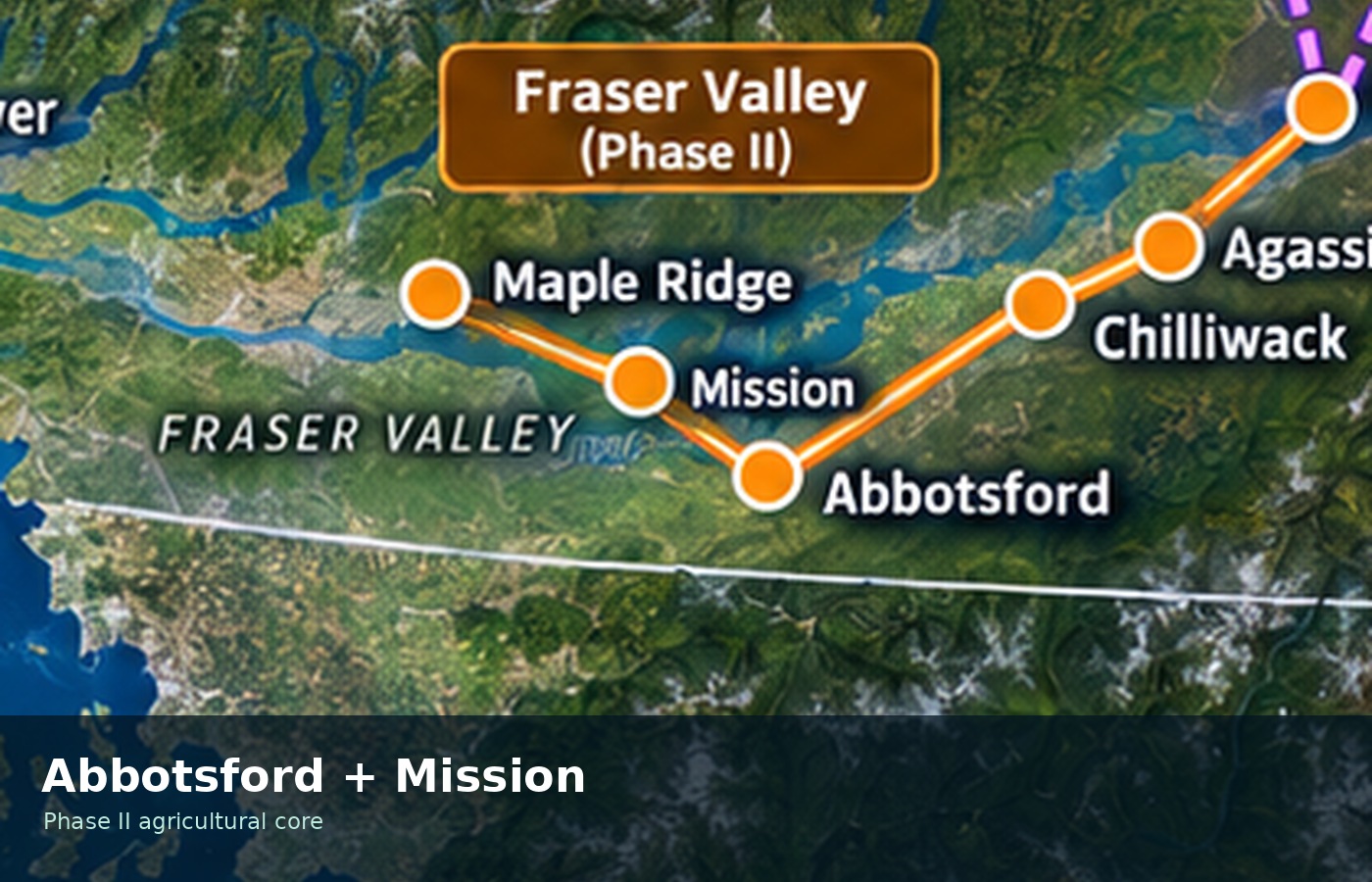
B.C. agriculture guidance notes that most of the province’s greenhouse operations are located in the Fraser Valley and that greenhouse production can be many times more productive per unit area than field production. That existing cluster is a strong reason to make the Fraser Valley the second phase rather than trying to recreate every supply chain from scratch in the Interior.
Links the Fraser corridor to the Interior resilience path, with mountainous terrain making careful land and route selection essential.
Strong potential for greenhouse heat, cold-chain loads and food processing where compatible sites can be found.
A natural Phase II anchor because of established agriculture, logistics and access to the Lower Mainland market.
The Mission area offers a route-diversity concept across the Fraser and proximity to agricultural heat users.
Smaller urban-edge facilities can connect regional traffic while keeping the high-heat agricultural footprint farther east.
The western endpoint is primarily a network exchange/interconnect concept, not a promise to build a large farm campus in the urban core.
Phase II should lean harder on the clean provincial grid, heat recovery and established greenhouse operations. Solar can still help, but the system should not be designed as if Fraser Valley irradiance were the same as Osoyoos.